Showing posts with label David. Show all posts

Monday, May 2, 2011

David finishes learning for the rest of his life

As of last Friday, when I completed my last medical school clerkship, my brain has officially closed for business as far as all further medical edification is concerned. Now that I – and Kevin soon after – have fully internalized everything ever known about medicine, I have finally reached that ultimate goal set so many years ago in college: have another Senior Spring.

Goodbye, short coats. Hello, mid-week golf.


Sunday, March 20, 2011

David and Kevin match

In what will clearly go down in history as an against-all-odds triumph of previously unfathomable proportions, Kevin and I have managed to successfully match into (what we’ve been told are) accredited residency programs, keeping our medical hoop dreams alive for at least a few more years.

Since extreme levels of sarcasm and immaturity aren’t good for patient care, the NRMP supercomputers have deemed it necessary to place us on different coasts, leaving a chasm of barren, uninhabitable flyover country (like Iowa) between our respective programs.

Where we go from here, no one knows. Still, one thing is certain – it would probably be a bad idea to get really sick this June…

The David and Kevin Story

Wednesday, March 9, 2011

David stares at your body (CT)

After an extended hiatus to complete the residency application process - which is now out of our hands pending the upcoming NRMP Match - Kevin and I are making our triumphant return to the international zeitgeist. That special, tingly place in your hearts will once again be filled by our inter-musings, at least until the next point at which laziness, work, or lucrative alternatives occupy our lives.

-----------------------

One of the greatest perks of the 4th year of med school is the opportunity to relax once the rigors of application submissions and expensive interview trips are appropriately in the rearview mirror. Since med school isn’t over after rank lists go in or the Match occurs, most of us fill the remaining time with a combination of really relaxed rotations, useful electives we didn’t have time for earlier, and really, really relaxed rotations. Enter Radiology and a few thoughts about the pros and cons of a potential career in the reading room catacombs.


Pros:

1) You get to squeeze your mind grapes: Radiology requires a relatively unique combination of both general and specialized knowledge. Obviously, the field demands mastery of the intimate details of all of the numerous imaging modalities in the clinical repertoire. Yet it also requires a nuanced understanding of the clinical, anatomical, and surgical correlates of essentially all major radiological findings. Since clinicians order scans to assist in the diagnosis, treatment planning, or monitoring of disease, radiologists must have a working understanding of each of these processes in order to provide the most beneficial interpretation of whatever image comes their way. This keeps even a specialized radiologist fluent and up to date in many more facets of clinical and surgical medicine than many clinicians in any of those individual fields. For the learn-y types, this is a huge plus; you maintain a large database of clinical knowledge that’s not limited to any one particular patient population. For Jess, it’s probably a deal-breaker.

If Jess was a radiologist...

2) Calling out squiggles saves (many) lives: Though my role during the rotation was mainly perfecting formal terminology such as “badness,” “thatthingrightthere,” and “oooohhh noooo,” radiologists get the opportunity to employ the knowledge listed above to make a meaningful positive impact on a lot more patients than basically any clinician. An experienced radiologist can motor through figurative stacks of scans, each of which could provide the key finding that clinches an otherwise tentative diagnosis or redirects a lost primary team in an entirely new direction. Though the radiologist isn’t removing tumors or prescribing meds, she’s still saving babies as fast as anyone else in medicine.

3) You can make it rain then leave early and go play golf: It’s no secret that Rads offers a pretty cushy lifestyle relatively short on hours and long on compensation. In most practice settings, the time and energy sinks that plague other fields – things like overnight call and late-night emergencies – tend to be non-issues for radiologists. Come in at 8? Leave at 4? Don’t mind if I do!


Standard radiologist trophy wife


Cons:

1) No more patients (or people) for you: The stereotype of the isolated radiologist sitting alone in a dark room without that much human interaction really isn’t that far from the truth. Aside from the occasional image-guided biopsy or fluoro study, most radiologists spend the day…alone in a dark room without that much human interaction. Sure, they’ll chat with a few fellow radiologists, relay any pressing results to ordering clinicians, and talk with a variety of techs and administrators, but that’s essentially it. That may be a plus to some, but for the majority of those entering medicine, at least some meaningful patient interaction was probably a big part of their interest in becoming a doctor. In Radiology, you get vitamin D deficiency instead.

2) Med-malnanigans: The realities of Radiology make it an easy target for malpractice suits of all flavors. Any X-Ray, CT, MRI, etc., is saved and available in all its glory to anyone with 20/20 hindsight and a bone to pick after a less than favorable outcome. Though mistakes are made in rads as in any other field, the opportunity for second-guessing is greater when essentially the entirety of the clinical presentation is forever available for review. The byproduct is both frustrating and inevitable; many radiology reports devolve into nothing more than a list of sweet CYA nothings such as “cannot exclude,” “could represent,” “may suggest,” and a laundry list of kitchen-sink differentials. I’m sure the radiologists hate dictating those as much as everyone else hates reading them, but it’s hard to expect anything different in this particular medico-legal climate.

3) They could taakk yeerrrrrr jerrbs: A relatively hot-button topic, at least among many radiologists I’ve talked to, is the concept of outsourcing certain diagnostic radiological services to cheaper domestic areas or even abroad. After all, the radiologist doesn’t really need to be right downstairs all the time, and probably costs more sitting there in the dark than an equally competent physician working remotely (and sitting in the dark). If the notion of who is acceptably “remote” includes foreign docs or others willing to work more cheaply, then the current set-up for radiologists would clearly erode. Somewhat relatedly, Interventional Radiology, which can currently be pursued via post-Rads fellowship – and which offers patient contact, cutting-edge procedural awesomeness, and compensation up the wazoo – is also expected to diverge into its own completely independent residency and field in the not-too-distant future. Separating IR from diagnostic rads would remove one pretty appealing career path for the field, and only contributes to the uncertainty facing the profession in the next few years. (That said, given the scarcity of training positions and subsequent competitiveness of IR, going into diagnostic rads with an IR-or-bust mentality is sort of like getting a job at McDonald’s on the off-chance they’ll let you be the next Grimace. It’s risky to dream that big…)


Diagnostic or Interventional?


Friday, July 2, 2010

David and Kevin approach doctordom

After a year of 6-week journeys into the depths of numerous medical specialties, acquiring enough experience along the way to become indubitable experts capable of writing a series of specialty summaries, Kevin and I are now newly minted MS-IVs.

Farewell, penultimance. Greetings, ultimiosity.


Sunday, February 21, 2010

David doesn't believe in magic

As scientific, evidence-based fields go, medicine has to rank at or near the top. The best doctors make clinical decisions based on both years of experience and what the newest research has identified as the appropriate standard of care. Yet anyone who’s seen a medical TV show or spent any time on an inpatient ward has probably noticed the prominent role of superstition in what is otherwise a primarily logic-based endeavor.   

One of the more benign examples is the concept of “clouds.” For those unfamiliar, a white cloud is someone who brings good luck and light call nights along wherever he or she goes, while a black cloud puts Murphy’s Law to the test with regularity. These terms are often applied jokingly or even affectionately on the wards, yet it’s not uncommon hear them said with a completely straight face. I’ve also heard students and interns scolded for predicting easy call nights or forecasting uncomplicated patient stays based on all of the relevant admitting information.  

                                         I hope this isn't the MI cloud...                                                                  

Admittedly, a fair amount of this superstition is tongue-in-cheek inside joking. Yet I’ve been repeatedly surprised at how superstitious nurses, residents, and even attendings can be, particularly with regard to call nights and new patient admissions. As another example, during sign-out, when the daytime team gives a quick heads-up to the call team or night float about any pressing patient issues to be aware of overnight, I’ve had multiple permutations of the following exchange:

David: Ok, for Mr. X, I don’t anticipate any issues…

On-call Intern: Gah! Don’t say that! [Scrambles to knock on table]

David: …with him…wait, what?

On-call Intern: Never. Say. That. It’s bad luck.  [Knocks on wood again and prepares to sacrifice small bunny on a tiny altar made of old reflex hammers and adorned with four-leaf clovers]

David: Uh…Ok, sorry. I, uh, hope everything goes to pot and you get called all night about him…?

 ----------------------- 

After a few of these encounters on multiple rotations, I’ve come to take a slightly different tact, at least with those superstitious housestaff members with whom I’ve developed a friendly rapport:

David: Light call so far? No admissions?

On-call Intern: Shhhhh! Don’t jinx it!

David: Jinx what? The fact that tonight guarantees to be a complete admissions shut-out?

On-call Intern: Dude…

David: That this call will henceforth be the standard against which all other easy calls will forever be judged?

On-call Intern: I’m going to slap you…

David: The fact that the Deities of Patient Admissions – may they smite you if they exist – are clearly too impotent to put forward a worthy challenge on your call night?

On-call Intern: Forget the bunny, I’m going to sacrifice you instead.

David: That…

On-call Intern: You do realize I evaluate you, right?

David: Ruh-roh.

-----------------------

Maybe this is why I’m a black cloud…


Friday, February 19, 2010

Kevin and David think you might be interested in some merchandise

Now that David and I have reached our goal of becoming internet hundredaires, the next goal is to be come gajillionaires. After some brainstorming, we decided selling various merchandise at a 10% commission rate is the obvious way to go. So I've gone ahead and started a Zazzle store using the comics on iddx. Feel free to buy one or ninety. This is a pretty preliminary start but theres some mousepads available and a calendar of the comics. If you guys have any specific requests, let me know and I'll make it available (iddx underwear perhaps?). All proceeds do not go to charity. Unless you consider sleep-deprived med students to be charity cases, in which case 100% of the proceeds will be going to charity.


Store link: http://www.zazzle.com/iddxblog


make custom gifts at Zazzle

Monday, February 15, 2010

David and Kevin become internet hundredaires

When Kevin and I first started this blog, we wanted to provoke meaningful thought and discussion about medical education and chronicle the early steps towards physician-hood from the basic sciences to graduation and everything along the baby-saving, Jess-antagonizing, sleep-not-having way. All this, of course, only if the blog failed in its primary purpose of making us wealthy internet blogopreneurs who could quit med school and live a life of leisure for rest of our days.  


Well, friends, that day has finally arrived. Buoyed by a 100% legitimate string of ad-clicks, Kevin and I have reached the rarified status of making $100 in advertising revenue over the course of only two years. Averaged over all of the time spent writing and brainstorming, we’re in the oft-discussed yet rarely realized realm of multiple cents per-hour earnings. 


While we contemplate which Cayman isle to retire to now that this gravy train is going full-bore, we're planning a celebration in the interim, funded entirely by this massive windfall. Expect a spread truly befitting our recent successes; every attendee will get at least 1-2 pretzels, maybe more.

See you there!

--------------------------------------------

What?: IDDx Earnings Extravaganza

When?: Saturday, March 27th, 8PM - ???!?!?

Where?: TBD

Who?: Kevin, David, Julia, you, maybe Jess


                                                           Kevin is Fat Joe...


Wednesday, December 9, 2009

David and Kevin present some old favorites


Almost 2 years ago, David and I started IDDx with the humble hope of turning this site into a blogging powerhouse that could be our one-way ticket out of the obvious career dead-end that is medicine. Clearly that has not happened. But we have still managed to build (and re-build) a loyal following of readers that have somehow found our inane drivel to be entertaining (or at least interesting in a car crash-y kind of way). We thought this would be an appropriate time to revisit some of our old posts as a kind of year-end-review and maybe serve as a best-of (or worst-of, as the case may be with Jess) list for the newer readers. (Re)Enjoy.

-Kevin and David


Medical student life: A few insights into the fast-paced world of call-taking, baby-saving, and retractor-holding.

David, Robby, Dan, Beth, and the Johns save lives while on vacation.

Kevin wishes these classes were real.

Kevin falls, David watches.


Pre-medical advice: Words from the arguably wise about facing the application gauntlet.  

David tells you what to do (in an admissions interview).

Kevin debunks 2 myths about med school.

David presents the 15-15-1 theory.


Comics: Only stick figures can provide a true window into the inner med student soul.

MCAT - Then and Now

OB exams are tricky

Ideal vs. Reality - Emergency Medicine


Guest authorsWho's better - Julia, Jess, Julia, or Julia? You decide.

Julia knows exactly the kind of doctor she will become.

Jess tries to reach the keeds.

Julia presents a landmark case of PMS.


Random thoughts, pet peeves, and theories about life: A potpourri of IDDx musings.

David Presents His #2 Pet Peeve: Considers It Tomorrow At Midnight Guy

David has difficulty with doors.

Kevin contemplates the diet of the Little Mermaid


Friday, December 4, 2009

David treats a wise child

During a recent shift at a pediatric urgent care center, a young boy came in with a scald burn to his arm. As I debrided his wound, we discussed some of the pressing issues of youth, including how awesome dinosaurs are and whether or not mall Santas are real (consensus: of course they are). All of 5 years old, he was a total fighter and didn't complain one bit throughout the procedure. 

After a heated debate about how fast Spot runs - we both said some things we didn't mean - the following exchange occurred:

-----

David: This must've been pretty scary, but you've been doing great.

Kid: Hey, I'm not scared of anything. 

David: Nothing? Really (unsure whether or not to entrust him with my fear of clowns)? That's pretty impressive.

Kid: Nope, nothing...

        ...except bush babies.

-----

Mildly confused about what he was taking about, I allowed the conversation to shift, and soon he was all fixed up and on his way home. Later, a quick Google search provided the images that will give me night terrors for the rest of my natural life.


Wise choice, kid...


Tuesday, November 17, 2009

David breaks down Surgery

3 reasons to become a surgeon:

1. You get to do stuff and see if it works

Surgery is the pinnacle of immediate feedback; you identify a problem, do something concrete to fix it, and then evaluate whether or not it worked. More than any other specialty, the outcomes are measurable, tangible, and observable. You may sacrifice the continuity of primary care fields, but you also experience the unique satisfactions of knowing what’s wrong and getting your hands dirty trying to make things right. Fields like neurology, psychiatry, and others may involve long battles with nebulously defined disease processes where victories are measured in small, incremental improvements over years. That process yields its own personal and professional rewards and frustrations, but may not provide the same acute results that some students may find particularly appealing and which surgery deals out in spades.

2. Certified badassery

Few things in medicine are cooler than surgery. Though it may not be for everyone, no one can deny the sheer awesomeness of removing tumors, transplanting organs, and augmenting breasts (just kidding…?). Perhaps more commonly than in other fields, decisions are realistically life or death; a miscue here or a careless error there in the OR could have disastrous results. What’s more, the wealth of new technologies and general trend towards minimally-invasive procedures ensure that general surgery and the many surgical subspecialties will only further badassify in the future. Sure, more surgeons spend their lives in the bread and butter world of inguinal hernias and appendectomies than in the rarified air of reconstructive plastics and neurosurgery, but even the more vanilla procedures provide all the benefits listed above and below and may, due to volume, be even more targeted for technological advancement in the coming years.


I can’t believe Da Vinci painted the Mona Lisa and invented this robot…

3. Options like whoa

It is generally believed that medical students should first and foremost decide whether they want to be surgical or medical. If surgery is your cup of tea, there is a seemingly limitless array of opportunities to pursue. A general surgery residency is a common gateway to further subspecialty options such as burns, cardiothoracic, vascular, and pediatric surgery, among others, while other students choose to enter fields such as orthopedics, plastics, and ENT straightaway. Going further, many surgeons identify a specific procedure or set of similar procedures that becomes their uber-specialty within their broader branch of surgery. Basically, if there’s some type of cutting you want to do, you can probably make a career out of it.

3 reasons not to:

1. Training don’t quit

More than any other field, surgery demands an extensive period of training. A typical general surgery residency lasts five years, and further subspecialty fellowships can push that requirement into the two-digit territory. An R3 I worked with recently is pursuing a career in pediatric cardiothoracic surgery, a path that, with a general surgery residency, two years of research, a three-year CT fellowship, and a one-year peds CT fellowship, will ultimately require 11 years of training after medical school. Assuming one entered medical school immediately after undergrad at 21-23 years old, this would push off attending status – and the benefits of a legitimate salary and some semblance of a personal life – until one’s mid-to-late 30s. And though in a badass field like peds CT surgery you’d make it rain early and often thereafter, you’d still be spending the majority of the prime of your youth before ever realizing many of your career goals.

2. The hours never stop

Similar to OBGYN, surgery in nearly all of its forms is notorious for an extremely demanding workload and long hours on call. Though some subspecialties and practice settings may be less demanding, the fact remains that surgeons spend more time in the hospital than almost any other type of physician. When you factor in the extensive training required before even reaching the attending level, the demands of the subsequent career may simply not be something many medical students want in their future. (On a related note, it's worth mentioning that the hours / training demands take their toll on relationships as well; some surgical residencies have been known to have divorce rates exceeding 100%. In other words, residents get divorced, remarry and get divorced again. Just FYI...)

3. High-intensity work environment

By its nature, surgery is a high-stress world. The patient is commonly under general anesthesia and the manipulations of the procedure often entail significant blood loss. Small or careless transgressions can kill a patient either immediately or as a post-operative complication, and the surgeon running the show is ultimately responsible. Many surgeons trumpet the philosophy “trust no one,” something potentially disheartening on its surface but logical in a world where the surgeon is held accountable for any number of errors in the pre-, intra-, and post-operative setting. All these truths foster an environment some find less than hospitable, especially to those lower in the training hierarchy. Surgeons, on average, may be blunter and less forgiving in a professional environment than other physicians, and this, coupled with the long hours, can create a working world some students may choose to avoid.

Saturday, October 31, 2009

Kevin learns some important facts about childbirth

Ah, 3rd year. The promised land every 2nd year is dreaming of and the 9th level of hell that every 4th year wishes they could forget. So far David has given you a glimpse into the life of a 3rd year surgery rotation student. Now that I’m done with my OB/GYN rotation, I feel obliged to share some intriguing insights into the entire miracle of childbirth that people might not know.

1. It takes a long time
I know what you’ve seen in the movies: Katherine Heigl is out eating some dinner, talking about nothing, when suddenly her water breaks. She goes to the hospital and 15 minutes you have a baby. Not so much in real life. Life on the labor and delivery floor for a medical student is long and tedious. Your duties include watching the mom groan for a really long time, checking the fetal heart rate and then going back to watching the mom groan. Luckily most women are reasonable enough to ask for an epidural (or they’re so beaten down by the constant sensation of having a human being pass through their vagina that they’re willing to compromise on their previous beliefs) so that it’s mostly just waiting without having to hear the groaning. But really, the entire process from onset of labor to actual delivery can take hours, hours where you’re not allowed to sneak away and go watch ESPN in the doctor’s lounge. Or so I’ve been told…

Sigh... if only


2. It smells really really bad
Despite all the lectures about fetal positioning, physiology of pregnancy and the birthing process, no one bothered to tell me child birth is by far the smelliest processes a human being can experience. I mean seriously, it’s awful. First of all, everybody poops, especially in childbirth. When the pushing process takes an hour or two, it’s just a constant dribble of little poop balls. Luckily the nurses are really good about whisking them away but unfortunately the smell is always just hanging in the air. Then once the baby is delivered, there is a huge gush of amniotic fluid, blood, vernix and sometimes meconium. In case you don’t know what vernix is, here’s what up:
“Vernix has a highly variable makeup but is primarily composed of sebum, cells that have sloughed off the fetus's skin and shed lanugo hair.”

So in other words, if you were able to collect BO from 100 fat hairy dudes and somehow condense it into a paste, you’d have some vernix on your hands. I’m absolutely sure vernix was invented just to be the bane of my existence. Well… at least 80% sure.

This reminds me of one delivery I was on where I caught a vernix covered baby onto my chest, right between the numbers. Even though we clamped and cut the cord in a reasonable amount of time, it was too late. I was pasted in baby goo. No matter where I turned, the waft of vernix followed me. Unfortunately I still had to deliver the placenta (another thing people never tell you) and check vaginal lacerations. But, after being hit with the fetus grenade all I could focus on was not vomiting. Every time I moved, it would stir the air and I’d get a little more of that cheesy goodness. By the end I think I was taking about 1 breath a minute. If I was on a pulse ox someone probably would have called a codeAfter that delivery I had to excuse myself to dry heave in the bathroom.

3. You have to be happy for the parents
Maybe this is just a personal struggle of mine but I have a lot of trouble mustering up the happy feelings at 3am in the morning to congratulate the mom and dad on their new baby. Clearly the birth of a child, especially the first, is one of the greatest moments a person can experience… unless it’s not your baby, and especially if you’ve already seen 5 that day. At the end of the day, I really have trouble feigning the fake joy necessary to congratulate some new parents on their new baby, who happens to look exactly like the baby I saw 15 minutes ago. I can say he looks cute but really, that’s not true at all. New babies look like pink little aliens that cry a lot. That’s about all they do. It takes awhile before they develop the chubby cheeks necessary to look hilarious in lobster costumes, which you can then spread across the internet and hopefully haunt them in their adulthood. Until then, they really bring nothing to the table.


This is payback for being so smelly

Monday, October 26, 2009

David Takes Call

As you may have noticed, many moons have passed since our last post. Due to a mind-boggling lapse in (Kevin’s) judgment, our previous intertube oasis at iddxblog.com has been seized by web squatters. Still, in an effort to better the world (and stop Amanda from crying), we will soldier on at this address until Kevin can undo his folly.

Meanwhile, Kevin and I have narrowly avoided board failure and transitioned to the world of white coats, SOAP notes, and Jesse’s iatrogenesis. For Kevin, this has meant a fantastic voyage of babies and bad smells, while on Surgery, I’ve realized I was never truly tired at any point in my life until now. To illustrate, here’s a quick running diary of a recent call night.

0400: Mmmm, a fresh new day! Only 30-plus hours until next we meet, bed. I’ll think of you fondly while I’m gone.

0505: Pre-rounds and dressing changes. Note to self: Try not to do heroin.

1015: OR, first case. I don’t even know what you’re asking, but I’m going to go with “atelectasis.” Please don’t take my suture scissors away; they’re all I have…

1400: Second case. Pros: I’m actually touching a beating heart. Cons: I can’t feel my legs.

1600: Back on the floor. Are those my bowel sounds or the patient’s? Will he see if I eat some of his pudding?

1830: ED: Hmm, so that’s the most common orifice to hide drugs and drug-related paraphernalia...

1945: I didn’t realize so many people are allergic to "everything but 'Dah-lowd-ee.'” Must be an epidemic.

2100: If I crawled into the scanner and acted somnolent, would the nap be worth the repercussions while they imaged my head? Tough call.


This is the dream…

0020: If only I had some No Doze

0200: Boo-yah, there’s my second wind. This isn’t so bad. That stapler wasn’t an awful pillow and that guy waiting in the hall stopped giving me the stink-eye.

0600: Rounds II: Son of Rounds. I don’t even remember life on the outside. This must’ve been what Brooks felt like in Shawshank Redemption. I hope the sun is as bright as it is in my dreams. I hope…


It’s OK, Brooks. I understand.

0945: Clinic. Can you turn your head and cough, please?

1215: Off. If I don’t make it home alive, at least I touched a heart.

Monday, June 8, 2009

David breaks down his USMLE Step-1 study habits


*Including debating which Pandora channel best accompanies studying and using First Aid's cheap paper pages to wipe away tears.

Thursday, June 4, 2009

David questions Kevin's sanity

Just like grandma’s first resting tremor, Kevin’s recent post is an unfortunate sentinel sign of a burgeoning neurodegenerative disorder. Yet worse than Parkinson’s, Kevin’s affliction is a severe case of Nicolas Cageophilia. No other reasonable conclusion can justify his inexplicable love for the actor that brought us such cinematic asshattery as Snake Eyes, Ghost Rider, and The Wicker Man. Just look, if you dare, at the list of his four latest “films”:

1. Knowing - "Knowing is Everything."
2. Bangkok Dangerous - Something's happening in Bangkok, and it's probably not safe...
3. National Treasure: Book of Secrets - Fresh off a thrilling adventure in the first installment that involved a hidden treasure map on the back of the Declaration of Independence, the gang is back to uncover ancient Native American gold hidden within Mount Rushmore!
4. Next - Nuclear terrorism is afoot, and Nic Cage, Vegas magician, is the world's only hope.

This is a guy about whom YouTube videos are made en masse (thanks, NicCageFanClub1) solely to evidence the sheer ridiculousness of his frequent affronts to cinema. The actor whose movies even Kevin (and his early-onset Alzheimer’s) agrees he’d be most likely to avoid among Hollywood’s current leading men. The man who, after making the epic failure that was Ghost Rider, actually decided to re-up for a sequel to further his quest to make more people voluntarily claw out their own eyes. An actor whose recent run of movie-making futility has been so painful, I’m actually scared to turn on the TV during the summer for fear of watching 30 seconds of his next “I’ll-grow-out-my-hair-and-then-look-thinky-for-2-hours” debacle.


Knowing: Ooh, I’m thinky…


Next: Oh yeah, now my hair’s even longer, and I’m still thinky…


This isn’t even a movie, that’s how thinky I am!

Sure, Cage made a couple of decent movies in his distant past, but few of them depended on his acting prowess – The Rock was great, but does Nic Cage deserve a ton of credit for playing Overwhelmed Guy? – and none of his recent offerings have done anything but steal money from audiences and make babies cry. And yeah, he won an Oscar, which is basically a Hollywood political popularity vote, allowing him to join the illustrious ranks of Jennifer Connelly and Kate “The Female McConaughey” Hudson in the acting pantheon.

What’s worse, if Cage does possess any true talent, he’s even more unlikeable for electing to unleash such a garbage parade on humanity over the past half-decade. You can’t really criticize Keanu Reeves for poor acting; it’s all he can do. But if Cage can do better – and at this point, who would actually believe he can? – it’s an even bigger slap in the movie-going public’s face that he continues a nearly unprecedented run of sad clown cinema just to cash a check. In the medicine metaphor, Cage isn’t the plastic surgeon who sells out with breast augmentations instead of cleft palate repairs in the third world, he’s the doc that runs a healthy patient through the excessive work-up ringer to squeeze out as much insurance compensation as possible, delivering substandard care (and perhaps a bit of iatrogenic psychological trauma for good measure) to line his own and the hospital/movie studio’s pockets.

Honestly, Nic, how do you sleep at night? At least Kevin’s cortical tau body extravaganza gives him a legitimate excuse for supporting you…

Wednesday, June 3, 2009

Kevin is incensed at David's blatant consumption of Nicholas Cage Haterade

So David and I were chatting about movies yesterday when the subject of Nicholas Cage came up. Throughout the course of the conversation it became clear that while David has yet to obtain his MD, he has long since obtained his PhD. I know Nicholas Cage is not the easiest actor to defend but I felt the need to step in to prevent David from OD'ing on Haterade. Allow me to make a few points in support of our friend Nicky-G.

1) He's a good actor
Yes, he's put out a lot of stinkers (more about that later) but he has also put out a lot of quality films. Let me just list off some awesome movies he's been in:
  1. Leaving Las Vegas
  2. The Family Man
  3. Adaptation
  4. Matchstick Men
  5. Lord of War
  6. The Weather Man
These are all quality films that span quite a few genres. His acting was bananas in Adaptation. Lets not forget that he actually won a god damn Oscar for Leaving Las Vegas. DIf you haven't seen any of these movies, I suggest you stop being like Jesse and go rent them now.

2) He makes a shit load of money for himself
Despite having been in several really solid movies, I admit he's had his share of clunkers. But I would argue that he knew these were crappy movies going in and is only in it for the money. And how can you fault a brother for just wanting some cheddar. He loves classic cars and castles, and last time I checked, neither were on the Wendy's 99c menu. A lot of people do things "just for the money," especially David and this whole "medicine" thing. All I'm sayin' is, if plastic surgeons are allowed to fill their pockets w/ boob job money, Nicholas Cage shouldn't be hassled for cashing in his $20 mil. for National Treasure. Plus, even his crappy movies are reasonably entertaining if you just want some mindless action. The Rock and Face/Off are action movies staples that every man should have seen twice if not three times. Simply put, he's stared in some kick ass movies.

3) He makes a shit load of money for the studios
From my research, he's starred in 48 movies, 7 of which have gone on to make over $100 million dollars. Furthermore, the average gross of his last 10 movies was $74 mil, which actually beats out the likes of John Travolta, Pierce Brosnan, Bruce Willis, Denzel Washington, all of whom had similar per movie salaries.

Overall, I'm not saying Nicholas Cage is at the acting caliber of Russell Crowe or Edward Norton nor is he as bankable as Brad Pitt or Tom Cruise but he's not as awful as people make him out to be. He takes good 'actor-y' roles when he wants and then makes $100 mil. in between those to fund his little hobbies. Just let the man enjoy his money.

Thursday, May 28, 2009

David and Kevin escape MS-2

As of approximately 4:30 PM tomorrow, Kevin and I, along with the rest of our intrepid graduating class of 2011 (and Jess, knock on wood), will move from the dark, windowless classrooms of MS-1/2 and on towards the glorious hit parade of life-saving, personal fulfillment, and sleepiness that is sure to be 3rd year.

All that remain in between are a few weeks of faux-summer and a wee board exam. Bring on the sweet downslope of this curve.

Sunday, March 15, 2009

David, Robby, Dan, Beth and the Johns save lives while on vacation

Recently, our MS-2 class finished winter quarter and moved one precarious step closer to the wonders of clinical Candyland and all its third-year clerkship glory. To celebrate this historic accomplishment, several of our noble band – including Dan, Old John, Stalker-y John, Robby, and Beth (Mrs. Robby) – traveled to Montana for a manly wilderness adventure. (Kevin wasn’t allowed because the state of Montana has an Asian quota that was met when I joined the trip).

This sort of trip means several things: (1) an ungodly amount of pork consumption (Beth managed to create this); (2) an uncomfortable amount of “That’s what she said" jokes; (3) a nonstop country music bonanza; and (4) 5 med students and an RN (who knows approximately 4.3x more than the rest of us combined) having nerdy faux-medical debates for 4 days.

After a productive morning of snowy adventuring (them) and sleeping (me), we cranked up the country and were treated with a stirring performance of Rascal Flatt’s “Skin,” which tells the story of Sara Beth and her fight against an unknown hematologic malignancy.


We did what any reasonable Spring Breakers would and beat the song to death with the following lively discussion:

After listening to the song, one thing’s for sure: someone’s a poor historian. Seriously Sara Beth, how can we help you without more details? Associated symptoms? Fatigue or fever? Throw us a bone. And Rascal Flatts, did you even go to med school? This OCP is just awful. Even the referring physician’s dropping the ball (“Between the red and the white cells, something’s not right?” At least give us a blood smear.). Clearly we have to do all the work…

First, Sara Beth’s only a teenager, so we’re immediately thinking ALL.

Easy bruising? Sounds like thrombocytopenia.

Mixed “red and…white cell” involvement? Could be an expected pancytopenia.

An aggressive chemotherapeutic regimen with a ~70% cure rate (lowered to "six chances in ten" for Sara Beth due to her older age and its negative prognostic contribution)? Perhaps a little CVAD induction therapy.

If needed, we’ll be ready for marrow transplant on second remission after relapse.

Go enjoy your prom, Sara Beth. We’ve got it from here. Now, if you’ll excuse us, the kid from "John Q" needs a cardio consult for his hypertrophic cardiomyopathy and then we’ve got a 3 o’clock to get a CD4 count from Andrew Beckett in "Philadelphia."


Your son's next, Denzel...

Monday, March 9, 2009

David tells you what to do (in an admissions interview)

Previously, I’ve given advice of variable seriosity to pre-medical students, both here and in person, usually with respect to the MCAT, personal statement, and general application process. This year, due to a clear administrative error in the selection process, I was allowed to join our school’s admissions committee to serve as a student interviewer. In addition to granting me a golden opportunity to implement my subversive personal agenda, this position has further demonstrated how important the interview is in the admissions process and where applicants commonly stumble or succeed in separating themselves from the pack.

When Kevin and I are asked to speak to pre-meds about admissions, people often think of the interview as a high-stress, nebulous obstacle shrouded in enigmatic mysteriousness with a black-boxy finish. To assuage these concerns, and so that future generations of medical students will learn from those who came before, I present a few suggestions for anyone with an upcoming med school interview:

1) Prepare, prepare, prepare:

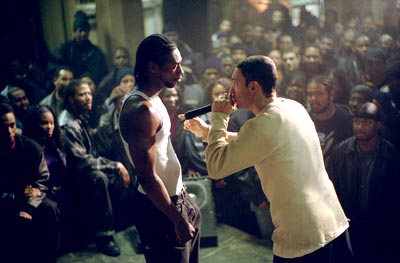
This one’s obvious, right? In med school interviews, as in “8 Mile,” you only get one shot. You spent weeks/months preparing for the MCAT and years kicking ass in your science courses, during extracurricular activities, and while saving babies in the free health clinic you established in between curing cancer and playing varsity lacrosse for a school that isn’t Duke. That work ethic is what got you to the interview in the first place, so don’t abandon it now. You’d be surprised how often people seem un- or underprepared to discuss the most basic topics they MUST know will be coming down the question pipeline. There is a 105% chance you’re going to be asked why you want to go into medicine, why it excites you, and what experiences led you to the decision that the next 7+ years of training and three subsequent decades of practice are what you want to do with your life. Think about how you’d answer these questions and practice discussing them in some sort of mock interview format. You don’t need a canned script, but if you don’t have a compelling reason why you want the MD, why would the admissions committee make one up for you?

Along these lines, make sure you’re familiar with the specific program for which you are interviewing. Why does the curriculum appeal to you? What’s unique to that school that will help you reach your professional goals and why are your strengths well suited to that school? This stuff is coming, so you might as well prepare for it. Be Eminem vs. Papa Doc, not Proof. (RIP, Proof.)


Your interview should be like this, but less profane and with fewer tanktops.

2) Research the health care system:

This is an extension of (1); you’re entering a system almost universally recognized as broken, with a myriad of significant issues and just as many proposed solutions. As Atul Gawande once said, “The infrastructure and delivery of American health care are wack, yo*.” This issue is all over the news and, more importantly, is going to affect you every day of your professional life. So spending 10 hours reading about our system and its major pros/cons, about the employees who studied in online medical coding courses, nationalized health programs implemented abroad, recent legislation, etc., would be extremely high-yield. And really, it’s not like anyone expects the applicant to solve the health crisis in one hour. Still, it’s reasonable to expect a candidate to be familiar with the major issues of the profession she wishes to enter; it shows the applicant cares and, just as significantly, that she took the effort to prepare for the interview.

3) Be honest:

Adcoms interview a lot of people. They hear a lot of stories and develop a sensitive radar for half-truths and general BS. If you don’t know in what or if you want to specialize, I think that’s fine, but a vague story about how reconstructive surgery is your calling will ring hollow if you have no experiences to back it up. If you get asked a factual question you can’t answer or are asked to discuss something that requires background information you don’t know, it’s better to admit it and ask for what you need or discuss ways you’d obtain the information required than to make stuff up on the fly. No one expects you to have all the answers. If you did, there’d be no need for med school. You’d just stop by the front desk for a white coat and board certification and be on your life-saving way.

4) Be engaging:

An interview is as much about figuring out who you are and how you interact with others as it is a discussion of your credentials / experiences. An interview is inherently subjective. Think about what types of interviewer-interviewee discussions would positively resonate with an interviewer when he or she evaluates a candidate. An applicant who is warm and personable makes a more favorable impression than one who is excessively reserved. Sure, the interview is serious, and it might not be the time for a risqué joke, but it’s still important to connect with your audience. Your demeanor during the interview can provide a window into how compassionate you might be with patients and how well you’d interact as part of a small team. Don’t affect insincere enthusiasm, but try your best to enjoy the interview and show your true personality. Smiling doesn’t hurt.

All of the above may seem intuitive, but you'd be surprised how often otherwise well-qualified candidates struggle in these areas. Mostly it appears to be an issue of preparation, so spend as much time thinking/talking through these issues as you can. It will definitely pay off in the end.


*He didn’t really say this. I think it was actually part of the Flexner Report…

Wednesday, March 4, 2009

Kevin is unimpressed with some of his future colleagues

Recently David and I went with many of our classmates to a medical student research conference to present the groundbreaking research we all did this summer. There aren't a lot of requirements for submitting an abstract but nevertheless it’s a great opportunity to waste 4 days in a cool location meeting students from other medical schools and boozing it up at night. At the end of the weekend you get your “research” abstract published in a journal that will likely benefit no one. But we're really hoping JAMA accepts Beef Stew.

Anyone presenting at this conference is assigned a specific time slot which falls into one of many half-day time blocks at various rooms/locations around the conference site. The format is rather simple, you give a 10 minute talk followed by 3 minutes for questions from the audience. Our school was very insistent about students maintaining a certain level of professionalism at this event. Most of it is pretty straight forward: wear a suit, be respectful, don’t be drunk during the day. Easy. They were also especially adamant about students attending the entire half-day session they were assigned to rather than just showing up for your specific time slot then peacing out after the 15 minutes was up.

All this seems straight forward and self-apparent but not so for some of our colleagues from other medical schools... especially this one from the north. Instead of waking up early and showing up at the start of the half day session, these kids would swoop in about 5 minutes before their slotted time. Inevitably 10 of their classmates would also march in to root them on. When it was his turn the main kid would give his schpiel aboot his research into something related moose-related hunting injuries. Then as soon as his/her presentation was done, the entire posse would stand up and dash out before the moderator could make a passive-aggressive plea for students to stay.

So essentially a large gaggle of students would loudly file in during the middle of another student’s presentation, stay for 15 minutes for their friend's topic, then make a run for it when the next student is setting up his slides. Way to go guys.

*I just wanted to add that while I witnessed a few of these incidents, personally I was not a victim since there were no students from that school scheduled after me.  

Monday, February 16, 2009

David fails to understand honors (/pass/fail grading)

In the long months since Kevin's illuminating "year 2 is just year 1's uglier, more high-maintenance sister" entry, we have received countless e-mails with pressing questions and comments about the absence of irreverent med school insider-y wit filling the empty spaces in the lives of our devoted public. Here's a sampling of our fan mail:

Whyyyyyyyyyyyyyy???!!!!!
- Julia

I miss you guys so much it hurts sometimes.
- Jess

My one goal in life is to live long enough to see just one more post.
- John (the old one, not the stalker-y one)

Well, the posting drought ends now. RIP, John. (Oh, and Kevin has promised to write several more posts in the near future, though the quality may not rival 'year 2/year 1' brilliance.)

-------------------------------------------------

Second year, in all of its we-survived-first-year-and-now-we’re-almost-to-third-year glory, has added a new wrinkle to our academic lives: the ‘H.’ Whereas our med school employed a strictly Pass-Fail system during year one, we now face the world-altering prospect of a 50% increase in the number of possible grades. And though popular wisdom places these grades well down the totem pole of importance in one’s residency application, most students are nonetheless interested in filling their transcripts with as many pre-clinical H’s as they can muster.

The logic behind second year grades seems pretty clear: after a transitional first year where mastery of basic concepts is most important, an H/P/F system gives students a chance to distinguish themselves as the material becomes more advanced/clinically relevant. It rewards those who make the extra effort to excel, and such sustained motivation can only have a positive influence on one’s ultimate clinical competence.

Grading systems are designed to both motivate students and, by definition, stratify them based on performance. Grades provide valuable feedback to students and also give administrators at the next step in the academic ladder an essential signal about student achievement. There’s a reason med schools don’t let pre-meds take their pre-reqs P/F; a P only indicates the student demonstrated the minimum competence required to complete the course. Student X may have excelled or almost failed, but no one can know for sure within a purely P/F system.

The major downside of the H/P system is that, though it provides more information than the P/F system, it falls short of a third choice with a full range of grades (akin to the GPA system in college or HS) for no real reason. If adding the H makes sense, why not just take the plunge to a 4.0 scale with the traditional complement of +/-‘s? The purpose of grading is to provide valuable information to all interested parties: to students about their performance, to teachers about how well the material is being learned, to residency administrators about the academic prowess of prospective applicants, etc. If information is the goal, what benefits are there to purposefully providing less information in an H/P/F-only system*? Here are a few I’ve heard, but for the most part, they don’t stack up to deeper review:

1) The H/P/F system is less stressful.

In our system, a final grade of 90% or above usually qualifies one for honors. There may be extra essays involved to reach the holy honors land, but there’s always a numerical cut-off that separates the two strata. Thus, grading is essentially an all-or-none exercise. There is really no major difference in mastery between someone who scores 90% and someone with an 89.1%, yet there’s a reasonable chasm in their ultimate grades. The person with the 90% is in rarified air. The sub-90 % kid is left with a grade that is indistinguishable from a 70% effort. Compare this to a system in which 89% is a B+ and the resultant grade-point differential of a question or two is far less consequential. Which one is more stressful?

2) The H/P/F system motivates students to excel.

Though this is true, it fails to acknowledge that a more traditional grading system incorporates the same educational incentives without dragging along a few major downsides. In a typical 4.0 system, a student who gets an 85% in every class collects a series of B’s that ends up numerically equivalent to a colleague who gets half A’s and half C’s. In the H/P/F system, the former is left with a dreaded P-fest (teehee) while the latter gets rewarded with 50% H’s. Yet who is really the better student? The person who does consistently well but never aces anything or the one who completely ignores half of his classes in order to honor the other half? There may be no clear answer, but it is intuitively obvious that the H/P/F system incentivizes just this sort of all-or-none effort. Grades can both motivate students toward better performance and lead them to utilize practical ways to game the system.

3) It doesn’t really matter; preclinical grades are of little importance and it’s what you learn that determines how you perform when it really counts (during Step 1 and on the wards).

Sure, those other things are more important predictors of matching success than the preclinical transcript, but that doesn’t mean the latter is insignificant. At our school, preclinical grades factor into the behind-closed-doors ranking system that determines whether or not we’re eligible for AOA, which almost everyone agrees is a meaningful distinction. And regardless of how much they ‘matter,’ we should still try to find the best way to dole ‘em out.

4) Stop ranting and go do something useful like studying.

OK fine, you win. But instead of studying, I’m going to figure out if there’s some sort of 15-15-1 equivalent to residency applications…

*It’s not even so much, or at all, about how high the ‘H’ threshold is – it’s actually a lot easier to honor any given class at our school relative to the stories I’ve heard from friends at other institutions – but rather about the utility of the H/P/F system itself.